

20 Printable Adjectives Worksheets for Class 2
Learning describing words is an exciting part of early English education. These adjectives worksheets for class 2 help children improve vocabulary, sentence writing, grammar skills, and communication in a fun and beginner-friendly way. Young learners enjoy describing people, animals, places, foods, and objects around them, and adjectives make their sentences more interesting and meaningful.
Parents, teachers, tutors, and homeschool educators can use these class 2 adjectives worksheets to support grammar lessons through engaging classroom activities and printable learning exercises. These worksheets are designed to make English learning simple, interactive, and enjoyable for children.
In this article, you will find easy worksheet ideas, comparison activities, sentence-writing practice, and printable grammar worksheets that help Class 2 students build strong language skills.
What Are Adjectives for Kids?
Adjectives are words that describe nouns. They tell us more about a person, animal, place, or thing.
For example:
- A happy child
- A blue kite
- A tall building
- A soft blanket
Words like happy, blue, tall, and soft are adjectives because they describe something.
Children use adjectives every day while speaking and writing. Learning describing words helps students communicate more clearly and creatively.
How Adjectives Help Kids Describe People, Places, and Things
Adjectives help children explain what something looks like, feels like, sounds like, or tastes like.
Examples:
- The cake is sweet.
- The puppy is playful.
- The flower is beautiful.
- The bag is heavy.
Without adjectives, sentences sound plain and incomplete. Describing words add detail and make communication easier to understand.
Using worksheet on adjectives activities regularly helps children:
- Improve vocabulary
- Build stronger sentences
- Develop writing confidence
- Understand story details
- Express ideas clearly
Why Describing Words Improve Writing Skills
Adjectives make writing more colorful and interesting.
Instead of writing:
- “The bird flew away.”
Children can write:
- “The small yellow bird flew away.”
This gives readers a clearer picture.
Describing words worksheets also help students:
- Organize ideas better
- Learn sentence structure
- Improve reading comprehension
- Build stronger language skills
- Practice creative writing
Easy Describing Words Activities for Class 2
These beginner-friendly activities help students practice adjectives naturally.
1. Color Adjectives Worksheet
Children identify colors using simple adjectives.
Example sentence:
“The balloon is red.”
Activity:
Match color words with pictures.
Possible answers:
- Blue fish
- Green leaf
- Yellow sun
This worksheet improves vocabulary and color recognition.
2. Size Describing Words Worksheet
Students learn adjectives related to size.
Example sentence:
“The elephant is huge.”
Activity:
Circle the correct adjective under each picture.
Options:
- Big / Small
- Tall / Short
This worksheet teaches opposite adjectives.
3. Feelings Adjectives Worksheet
Kids learn words that describe emotions.
Example sentence:
“The girl feels happy.”
Activity:
Match faces with feeling words.
Suggested adjectives:
- Happy
- Angry
- Excited
- Sleepy
This worksheet improves emotional vocabulary.
Fun Grammar Practice with Adjectives
Fun grammar activities keep students engaged during lessons.
4. Animal Describing Words Worksheet
Children describe animals using adjectives.
Example sentence:
“The rabbit is fluffy.”
Activity:
Choose describing words for animal pictures.
Possible answers:
- Fast horse
- Tiny mouse
- Loud lion
This worksheet supports vocabulary building.
5. Food Adjectives Worksheet
Students describe foods using taste and texture words.
Example sentence:
“The lemonade is sour.”
Activity:
Match foods with adjectives.
Possible answers:
- Sweet cake
- Crunchy chips
- Cold juice
This worksheet makes grammar practice relatable.
6. Shape Adjectives Worksheet
Children learn adjectives related to shapes.
Example sentence:
“The plate is round.”
Activity:
Write adjectives below each shape.
Examples:
- Square box
- Round clock
- Long ruler
This worksheet combines language learning with shape recognition.
Printable English Worksheets for Class 2 Students
Printable worksheets help children practice grammar both at home and in classrooms.
7. Classroom Objects Worksheet
Students describe classroom items.
Example sentence:
“The desk is clean.”
Activity:
Write one adjective for each object.
Examples:
- Sharp pencil
- Heavy book
- Bright crayons
This worksheet improves classroom vocabulary.
8. Weather Adjectives Worksheet
Children learn weather-related describing words.
Example sentence:
“The day is sunny.”
Activity:
Match weather pictures with adjectives.
Possible answers:
- Rainy
- Windy
- Cloudy
- Hot
This worksheet connects grammar learning with everyday experiences.
9. Draw and Describe Worksheet
Students draw a picture and describe it.
Example sentence:
“My house is big and blue.”
Activity:
Draw favorite objects and write two adjectives.
This worksheet encourages creativity and sentence writing.
Comparing Adjectives Worksheets for Class 2
Comparison words help children compare people, animals, and objects.
Examples:
- Tall, taller, tallest
- Fast, faster, fastest
- Small, smaller, smallest
Comparison of adjectives worksheets teach students how to compare things clearly and correctly.
10. Tall and Taller Worksheet
Children compare heights using adjectives.
Example sentence:
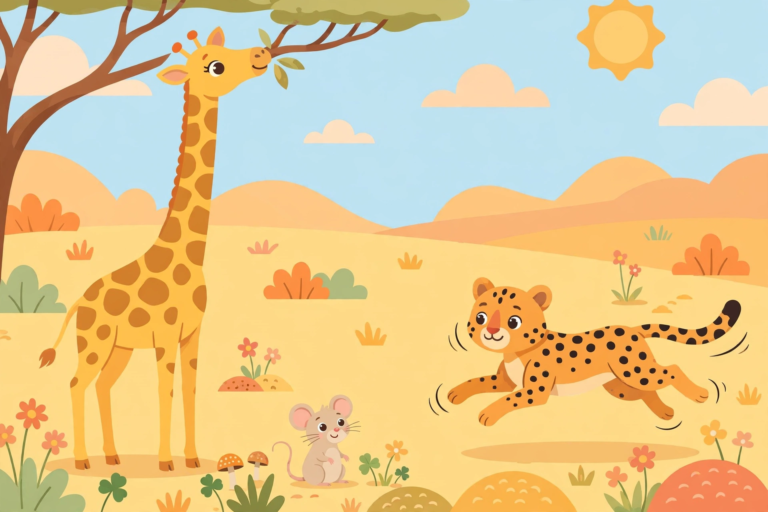
“The giraffe is taller than the zebra.”
Activity:
Circle the correct comparison word.
Options:
- Tall
- Taller
- Tallest
This worksheet introduces comparison grammar.
11. Fast and Faster Worksheet
Students compare speed.
Example sentence:
“The cheetah is faster than the dog.”
Activity:
Match animals with comparison words.
Suggested answers:
- Fast rabbit
- Faster horse
- Fastest cheetah
This worksheet strengthens understanding of comparison words.
12. Big, Bigger, Biggest Worksheet
Children practice size comparisons.
Example sentence:
“The elephant is the biggest animal.”
Activity:
Fill in blanks using comparison adjectives.
Word bank:
- Big
- Bigger
- Biggest
This worksheet improves grammar accuracy.
Comparison of Adjectives Examples for Kids
Simple comparison examples help children understand grammar rules more easily.
Examples:
- A lion is bigger than a cat.
- Summer is hotter than winter.
- A rabbit is smaller than a horse.
- Mount Everest is the tallest mountain.
These sentence examples help students practice comparison of adjectives naturally.
Writing Sentences with Adjectives Worksheets for Class 2
Sentence-writing practice helps children use adjectives correctly in daily communication.
13. Complete the Sentence Worksheet
Children fill in missing adjectives.
Example sentence:
“The flower is _____.”
Activity:
Choose words from a word bank.
Word bank:
- Pretty
- Tiny
- Bright
- Soft
This worksheet supports reading and grammar skills.
14. Sentence Building Worksheet
Students create complete sentences using adjectives.
Example sentence:
“The playful puppy runs fast.”
Activity:
Use picture prompts to build sentences.
Suggested adjectives:
- Funny
- Cold
- Bright
- Loud
This worksheet improves writing confidence.
15. Describe Your Friend Worksheet
Children use kind adjectives to describe classmates.
Example sentence:
“My friend is helpful.”
Activity:
Write two adjectives about a friend.
Suggested adjectives:
- Friendly
- Cheerful
- Smart
- Funny
This activity encourages positive communication.
Simple Sentence Writing Practice Using Adjectives
Sentence-writing activities help students use grammar naturally.
Examples:
- The soup is hot.
- The flower is pink.
- The dog is playful.
- The truck is large.
Simple writing exercises improve sentence structure and vocabulary development.
16. Picture Description Worksheet
Children describe pictures using adjectives.
Example sentence:
“The bird is colorful.”
Activity:
Write two adjectives under each image.
Suggested words:
- Bright
- Soft
- Tiny
- Beautiful
This worksheet improves observation skills.
17. My Favorite Toy Worksheet
Students describe favorite toys.
Example sentence:
“My teddy bear is soft.”
Activity:
Draw a toy and write adjectives about it.
Possible adjectives:
- Cute
- Funny
- New
- Small
This worksheet combines creativity with grammar practice.
Classroom Grammar Activities with Describing Words
Interactive grammar activities help students learn through movement and teamwork.
18. Adjective Hunt Activity
Children walk around the classroom finding objects to describe.
Examples:
- Blue chair
- Big table
- Clean board
This activity improves vocabulary recognition.
19. Adjective Sorting Worksheet
Students sort adjectives into groups.
Categories:
- Colors
- Feelings
- Sizes
- Shapes
Examples:
- Happy
- Red
- Tiny
- Round
This worksheet helps children organize vocabulary.
20. Adjective Word Search Worksheet
Children find describing words hidden in a puzzle.
Activity:
Circle adjectives in the word search.
Possible words:
- Tall
- Happy
- Bright
- Soft
This worksheet improves spelling and word recognition.
Tips for Teaching Adjectives to Young Learners
Teaching describing words becomes easier when lessons are interactive and simple.
Use Everyday Examples
Show real objects and ask children to describe them.
Example:
- Is the apple red or green?
- Is the pillow soft or hard?
Read Picture Books
Storybooks introduce children to new adjectives naturally.
Practice Daily
Short grammar activities help children remember vocabulary better.
Encourage Speaking Activities
Ask students to describe toys, foods, pets, or classroom objects.
Use Printable Worksheets
Printable learning worksheets make practice fun and organized.
Benefits of Printable Adjectives Worksheets
Using adjectives practice worksheets regularly provides many learning benefits.
Better Vocabulary Skills
Children learn new describing words every day.
Improved Sentence Writing
Students create clearer and more detailed sentences.
Stronger Reading Comprehension
Understanding adjectives helps children understand stories better.
More Confident Communication
Kids become comfortable expressing ideas clearly.
Fun Grammar Learning
Interactive worksheets make English practice enjoyable.
Printable Worksheet Practice Ideas
Teachers and parents can use printable worksheets during:
- Homework sessions
- Classroom practice
- Homeschool learning
- Morning activities
- Weekend learning
- Tutoring sessions
Popular worksheet themes include:
- Animals
- Nature
- Weather
- Toys
- Family
- School objects
- Seasons
These class 2 English worksheets support early grammar and vocabulary development.
Sentence Writing Exercises Using Adjectives
Sentence-writing practice helps children use describing words naturally.
Easy writing prompts include:
- Describe your pet.
- Describe your classroom.
- Describe your favorite food.
- Describe the weather today.
- Describe your best friend.
Example answers:
- My cat is fluffy.
- The classroom is bright.
- The pizza is delicious.
- The weather is windy.
These activities strengthen writing confidence and grammar understanding.
FAQs About Adjectives Worksheets for Class 2
What are adjectives worksheets for class 2?
Adjectives worksheets for class 2 are printable grammar activities that teach children how to use describing words in sentences.
Why are describing words worksheets important for kids?
Describing words worksheets help children improve vocabulary, sentence-building skills, reading comprehension, and writing confidence.
What are some comparison of adjectives examples for kids?
Examples include:
- Tall, taller, tallest
- Fast, faster, fastest
- Small, smaller, smallest
How can teachers make grammar worksheets fun?
Teachers can use games, flashcards, drawing activities, picture descriptions, and classroom grammar challenges to make lessons more engaging.
Where can parents use printable English worksheets for Class 2?
Parents can use printable worksheets during homework, homeschool lessons, tutoring sessions, or weekend learning activities.
Conclusion
These adjectives worksheets for class 2 provide a fun and effective way for children to improve vocabulary, grammar, sentence writing, and communication skills. Through printable learning worksheets, comparison activities, and interactive sentence-building exercises, students develop stronger English skills while enjoying the learning process.
Whether used at home, in classrooms, tutoring sessions, or homeschool lessons, these class 2 adjectives worksheets help children become more confident readers, writers, and speakers.
Regular grammar practice with 20 Printable Adjectives Worksheets for Grade 1 Students supports long term language development and creative expression. These printable describing words activities help first-grade learners improve vocabulary, build stronger sentences, and develop better reading and writing skills through fun and interactive practice.
For younger learners, our adjectives worksheets for kindergarten offer a gentler start, and you can browse the full adjectives worksheets collection for more practice.
Free Printable Adjectives Worksheets
Here are 20 free printable worksheets for kids. Each worksheet below comes with its own printable sheet that includes the questions and a complete answer key.
Tip: press Ctrl+P (Windows) or Cmd+P (Mac) to print any worksheet below.
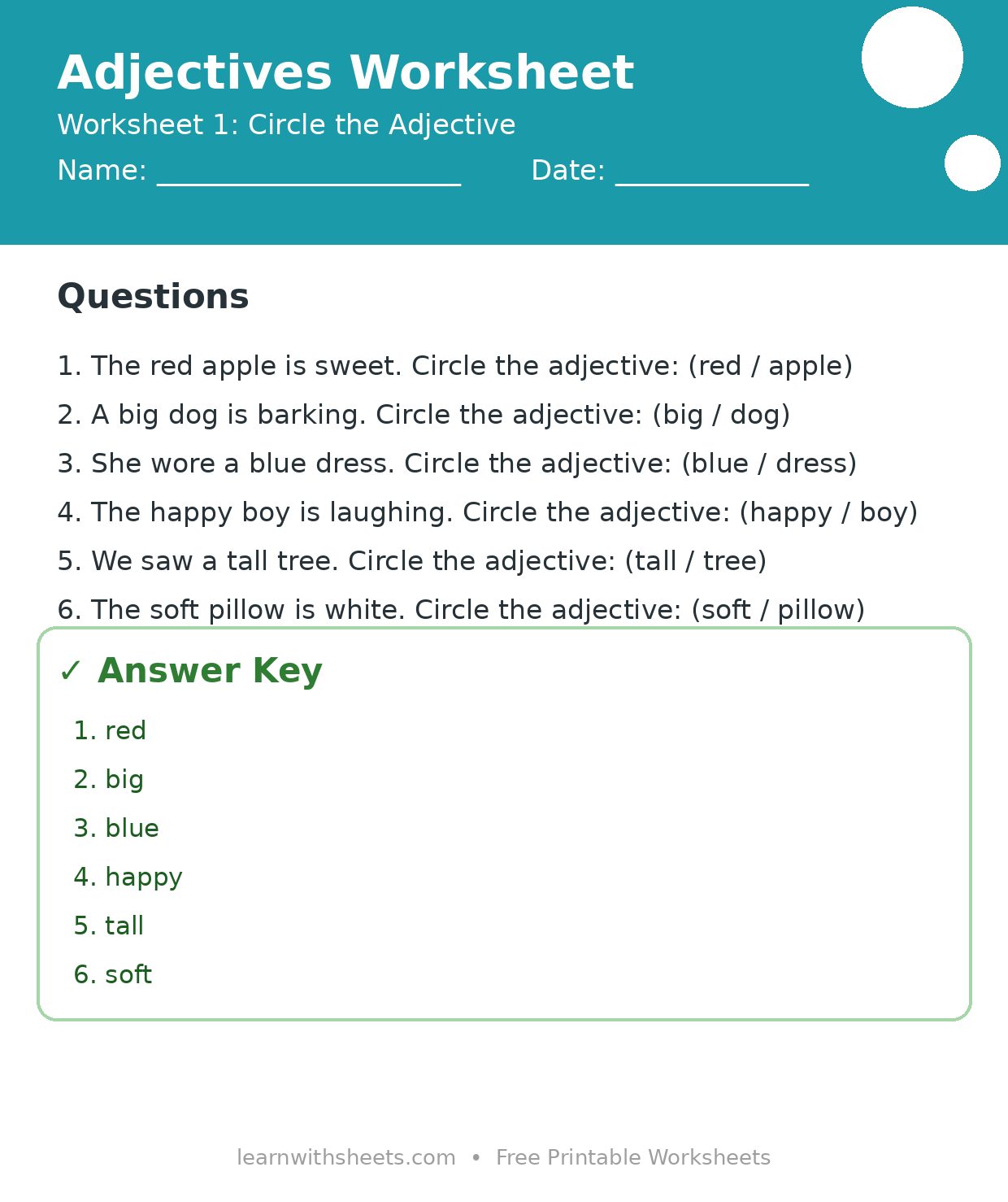
Worksheet 1: Circle the Adjective
Kids read each sentence and circle the describing word that tells more about the noun.
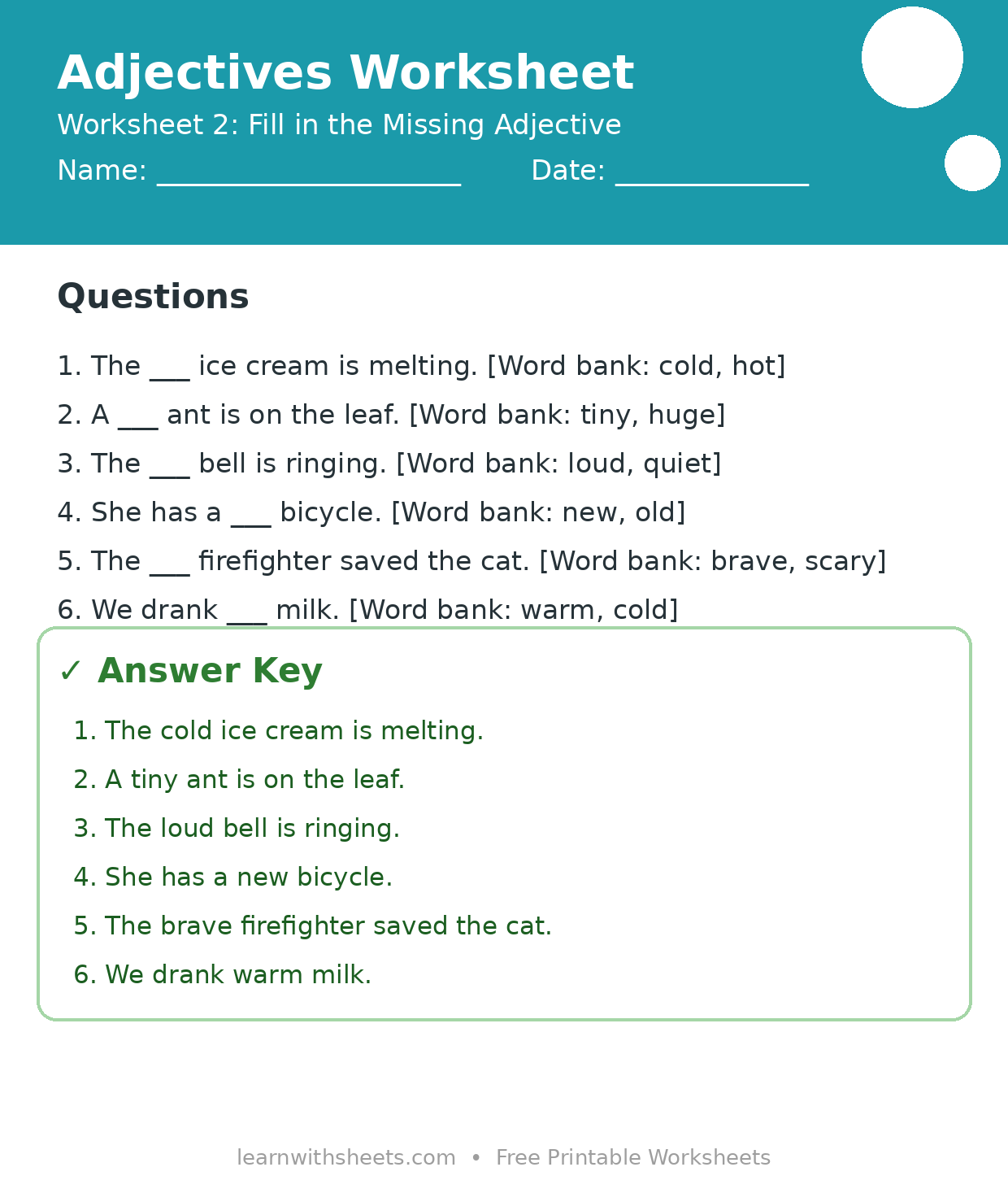
Worksheet 2: Fill in the Missing Adjective
Children pick a describing word from the word bank to finish each sentence.
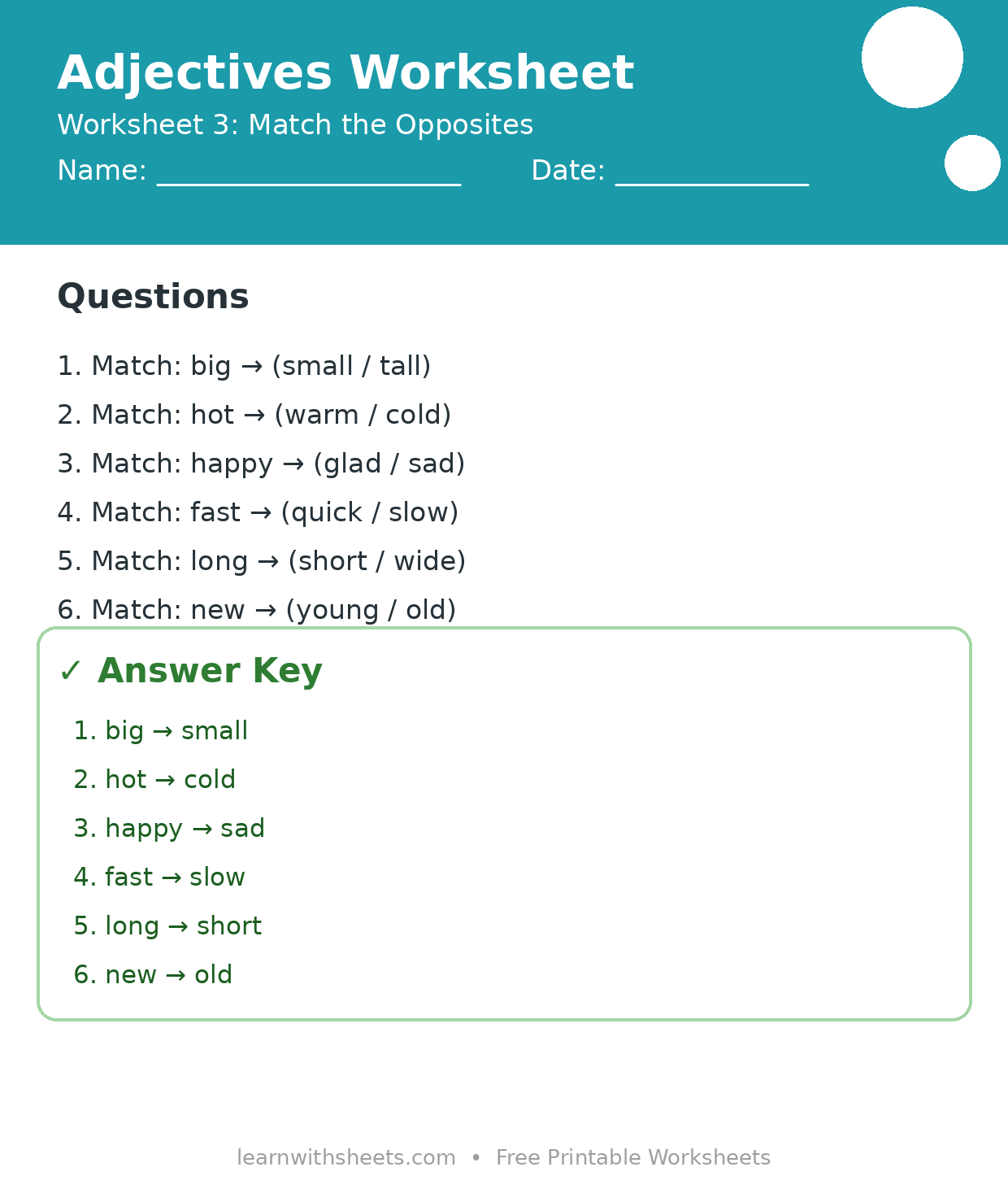
Worksheet 3: Match the Opposites
Draw a line to match each adjective with its opposite.
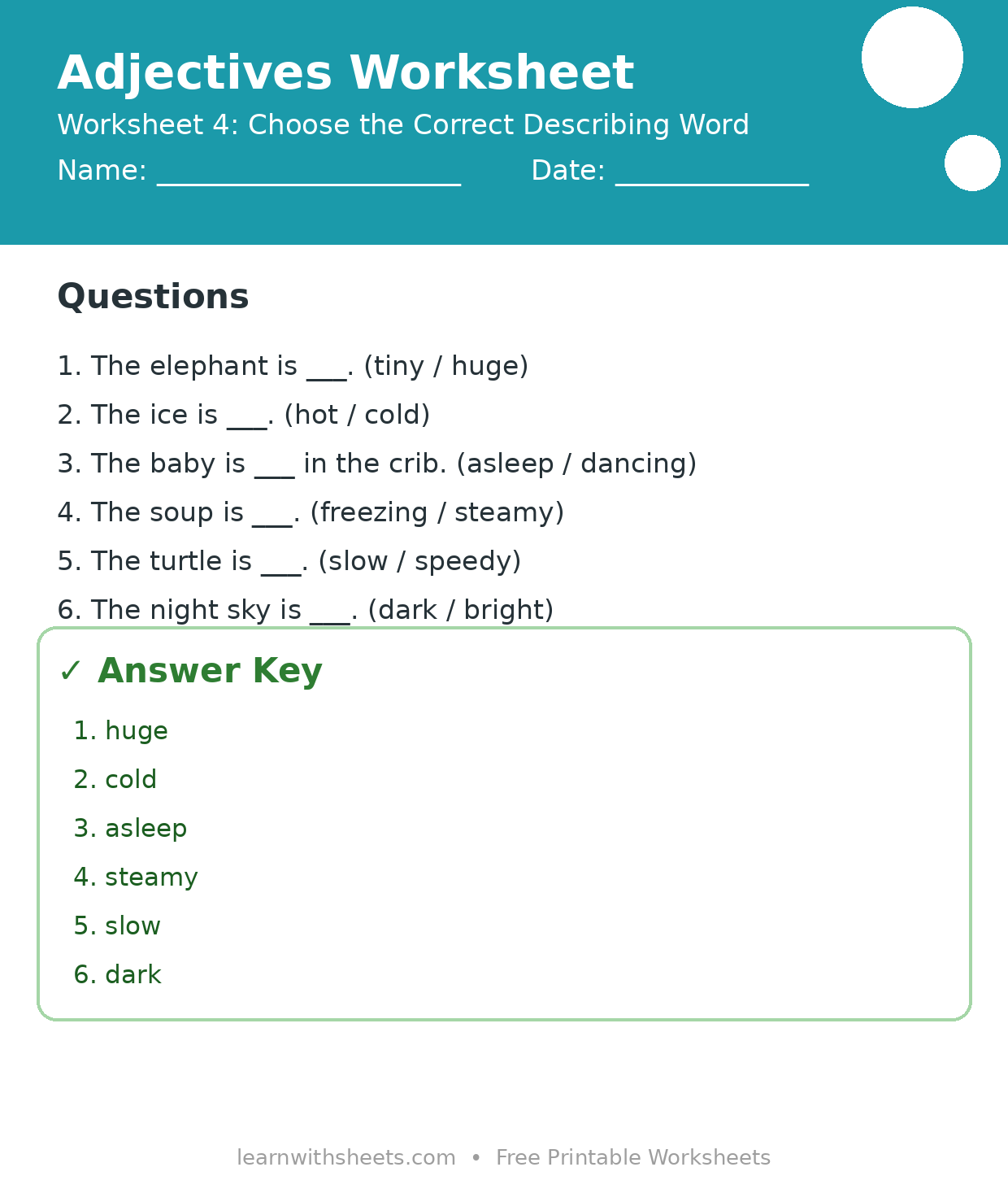
Worksheet 4: Choose the Correct Describing Word
Kids circle the adjective that best completes each sentence.
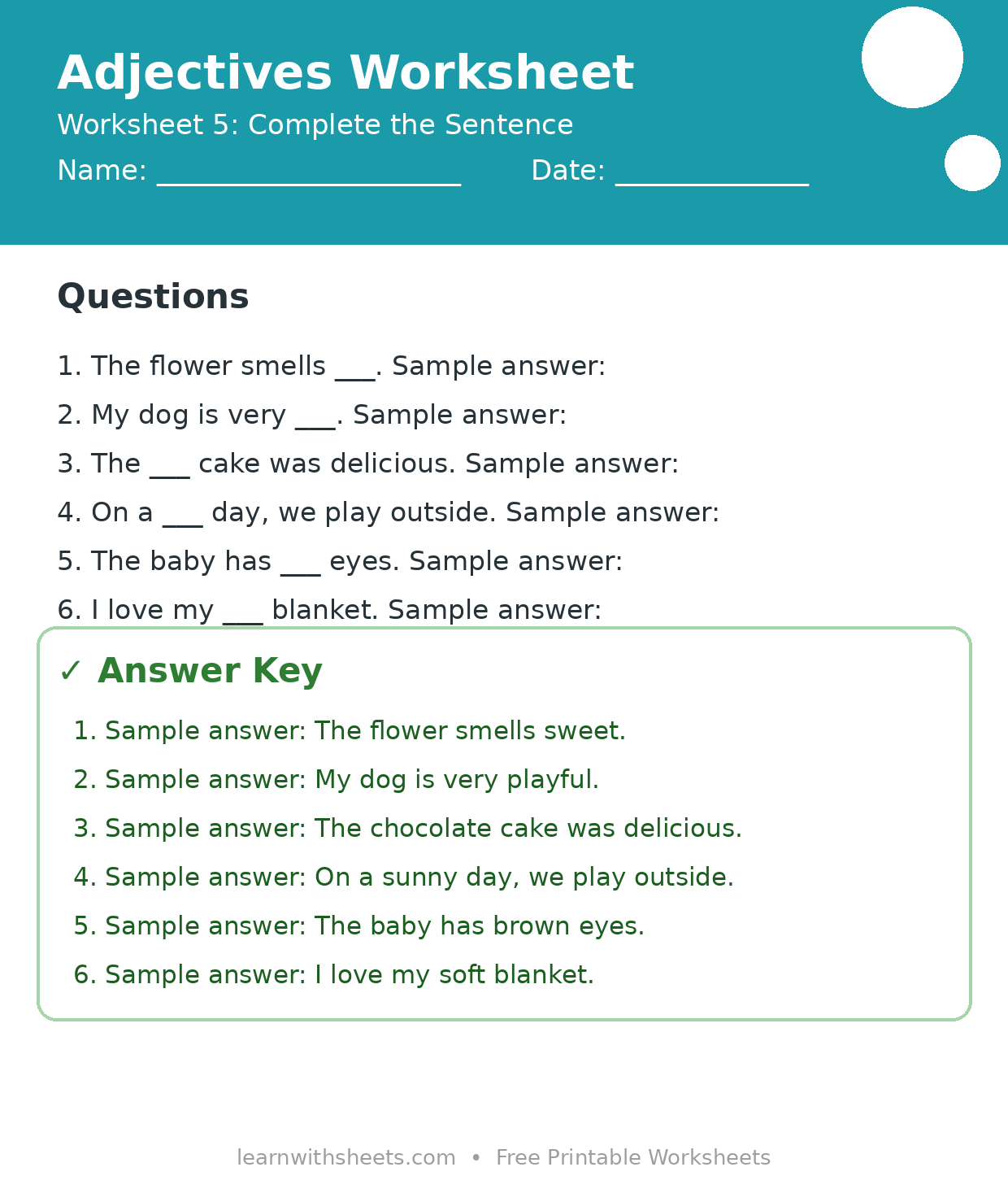
Worksheet 5: Complete the Sentence
Children finish each sentence with a describing word of their own. Sample answers are shown.
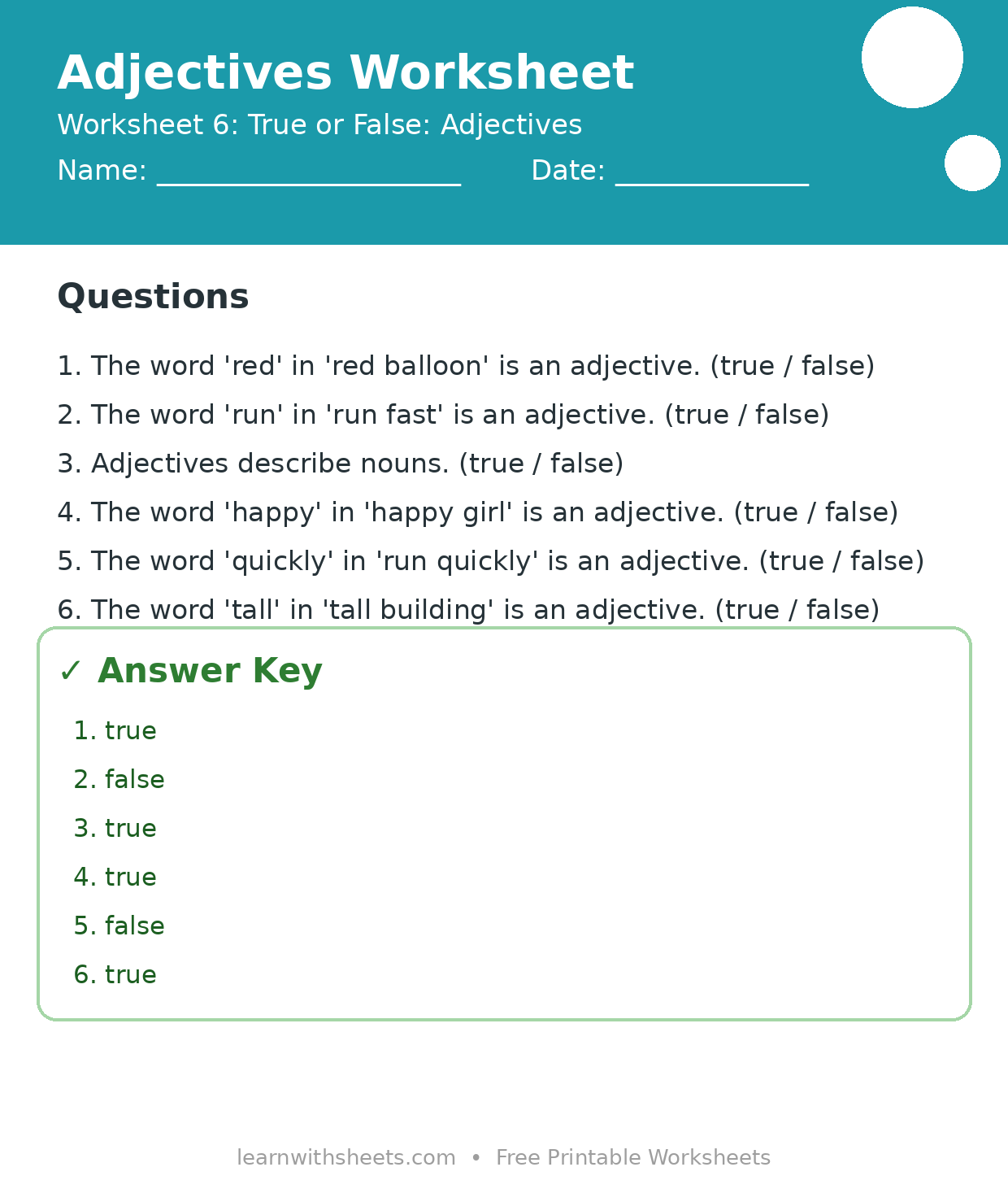
Worksheet 6: True or False: Adjectives
Read each statement about describing words and write true or false.
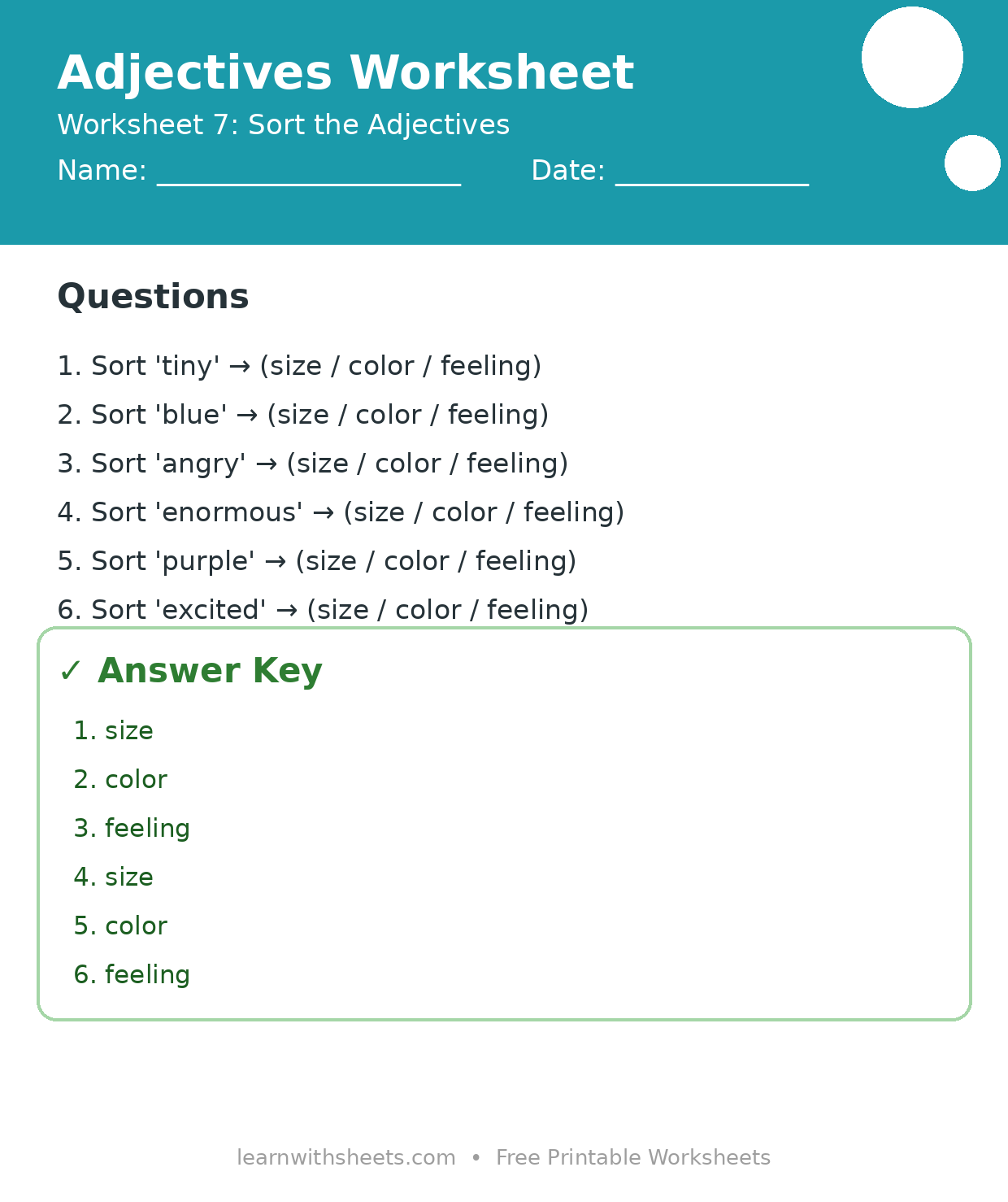
Worksheet 7: Sort the Adjectives
Sort each describing word into the correct group: size, color, or feeling.
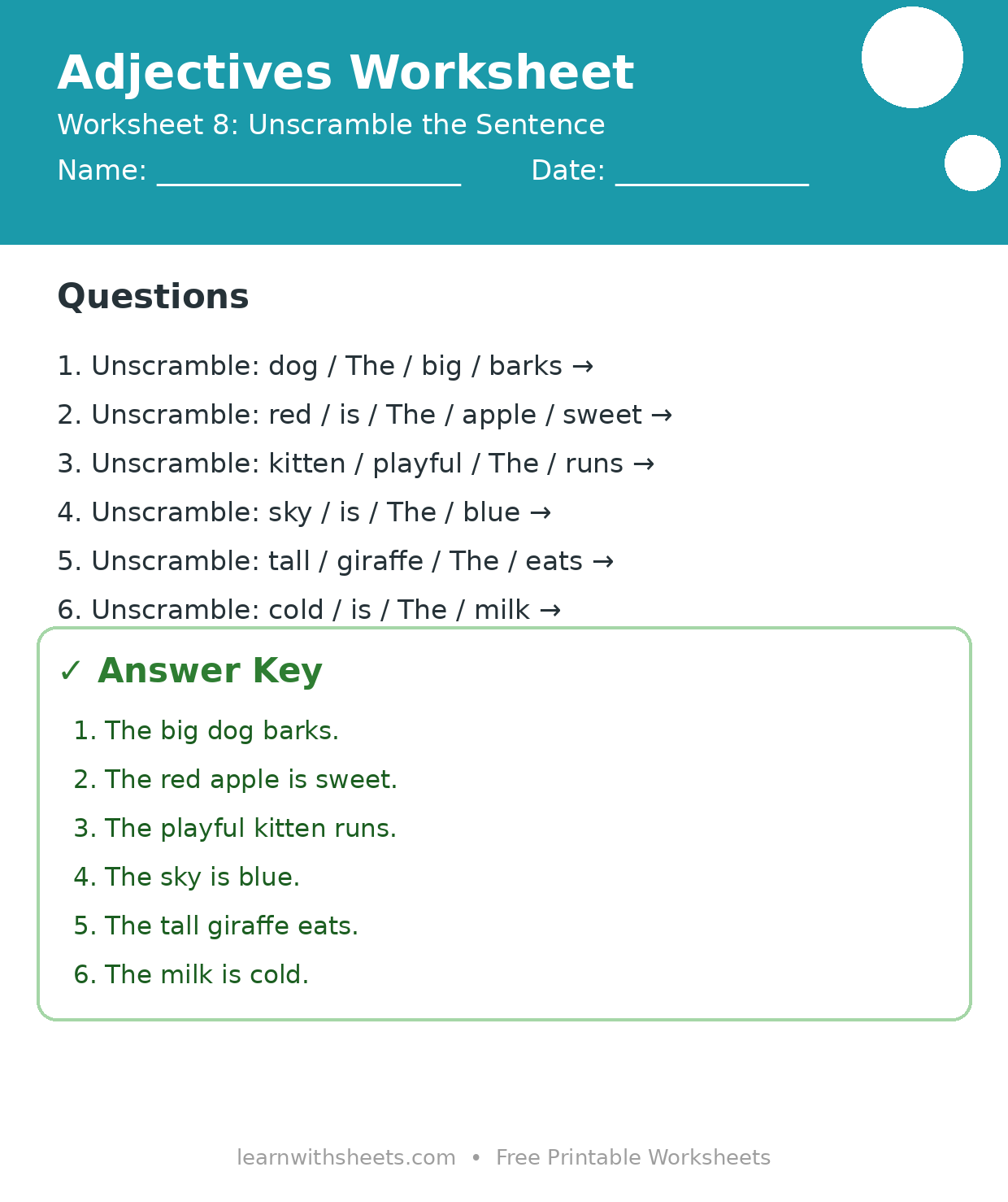
Worksheet 8: Unscramble the Sentence
Put the words in the correct order to build a sentence with an adjective.
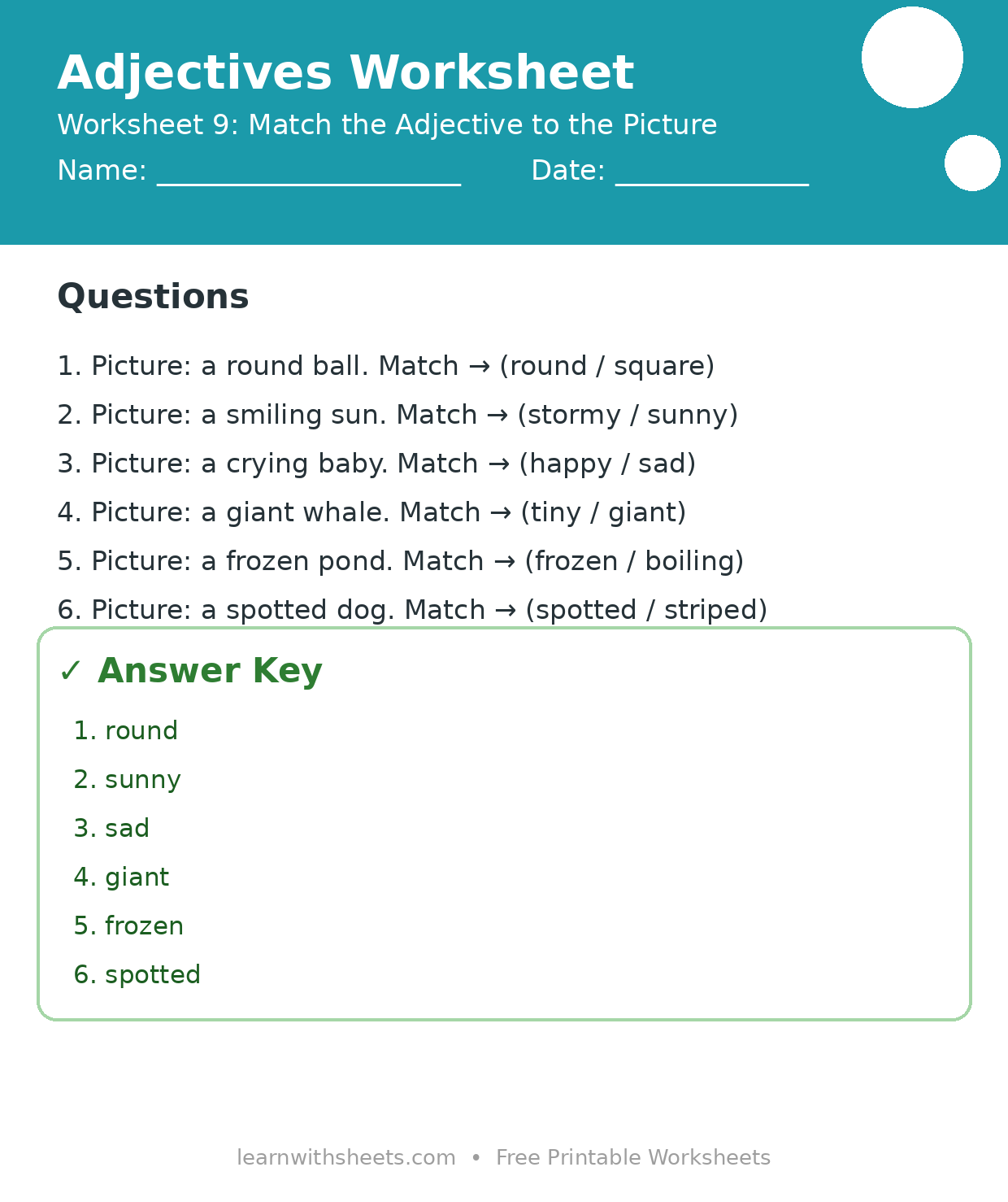
Worksheet 9: Match the Adjective to the Picture
Each picture is described in words. Match it to the correct describing word.
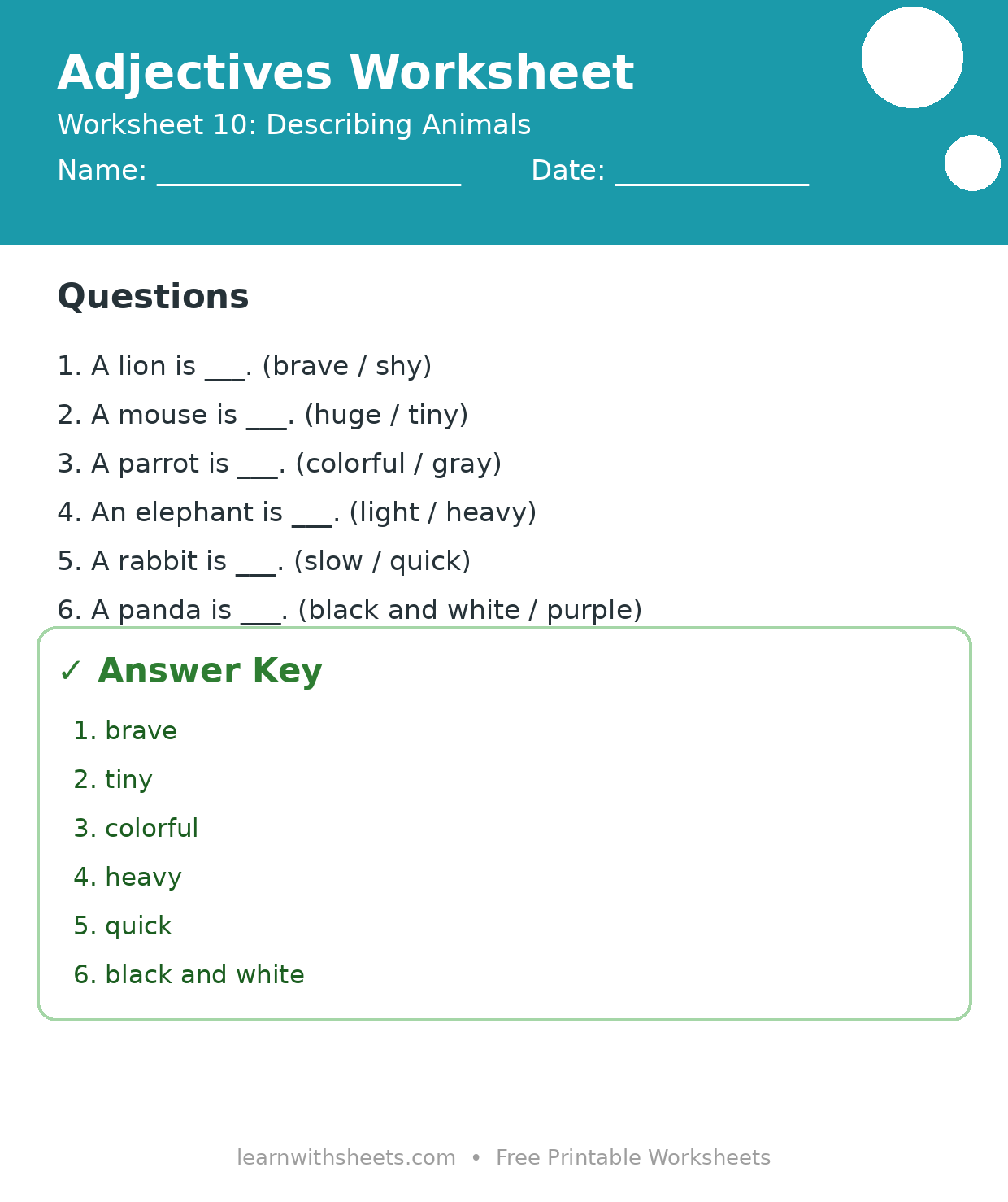
Worksheet 10: Describing Animals
Choose the adjective that best describes each animal.
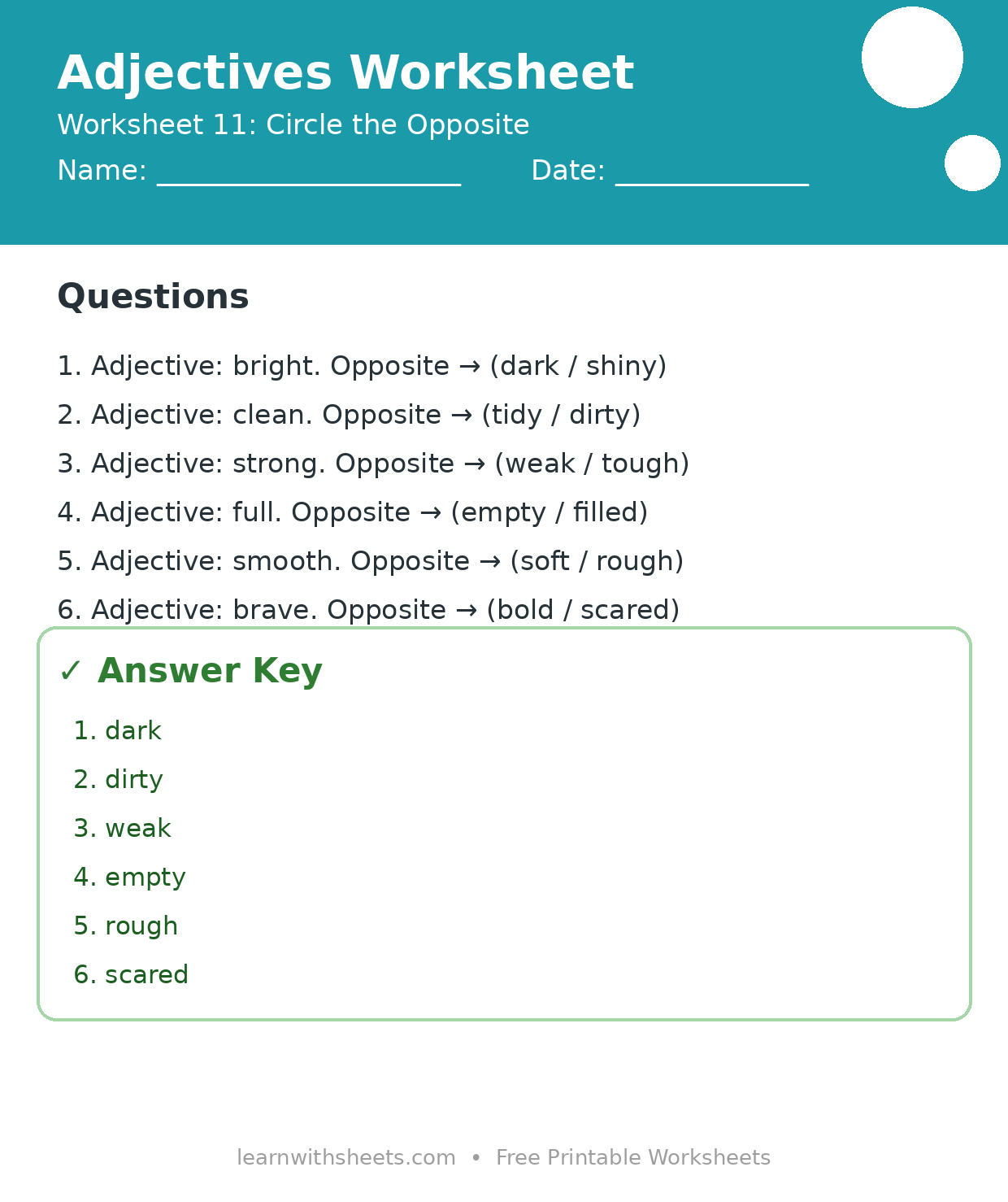
Worksheet 11: Circle the Opposite
Read the adjective, then circle its opposite.
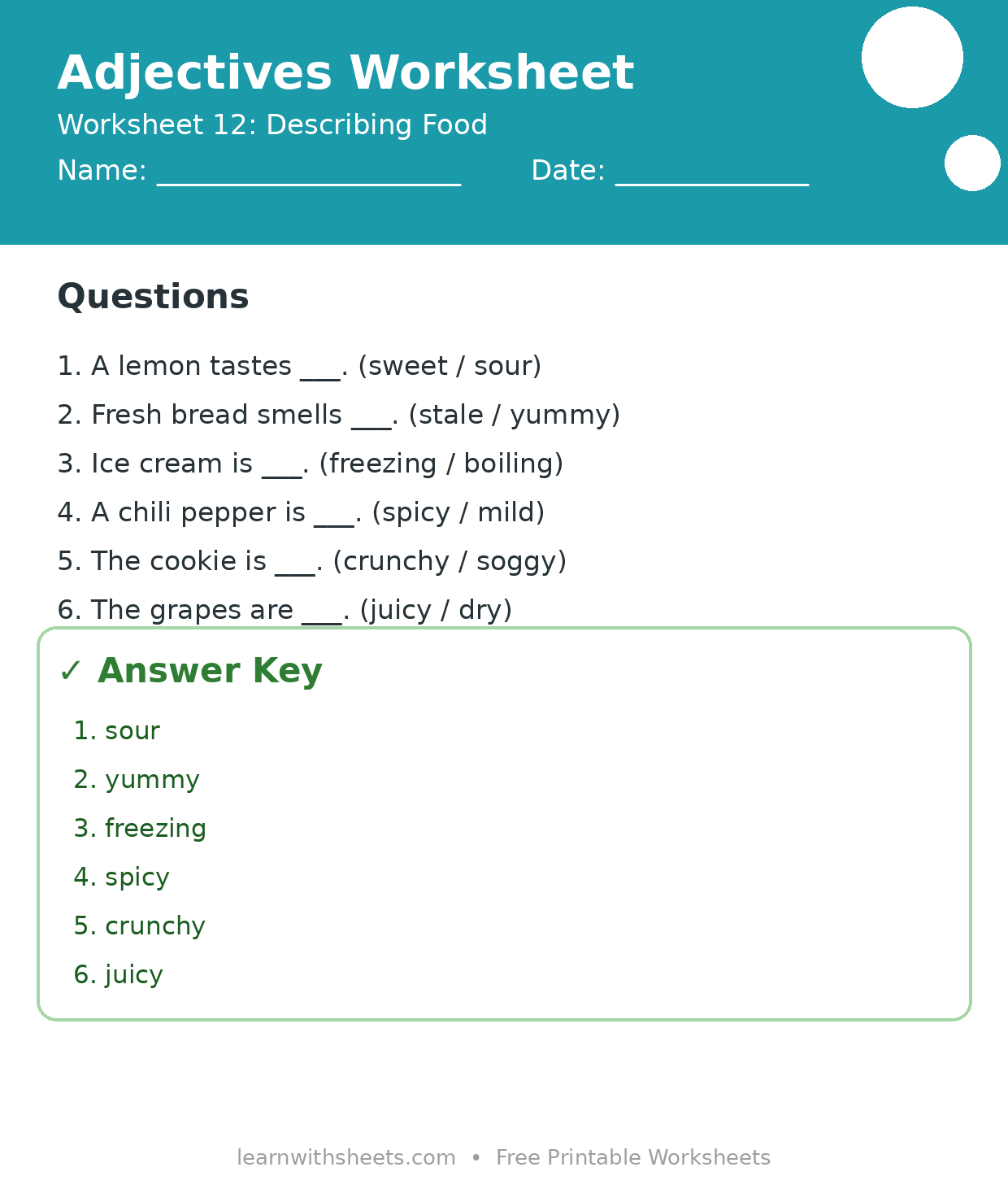
Worksheet 12: Describing Food
Pick the describing word that best matches each food.
Worksheet 13: Complete the Story
Fill in the missing describing words to finish the short story.
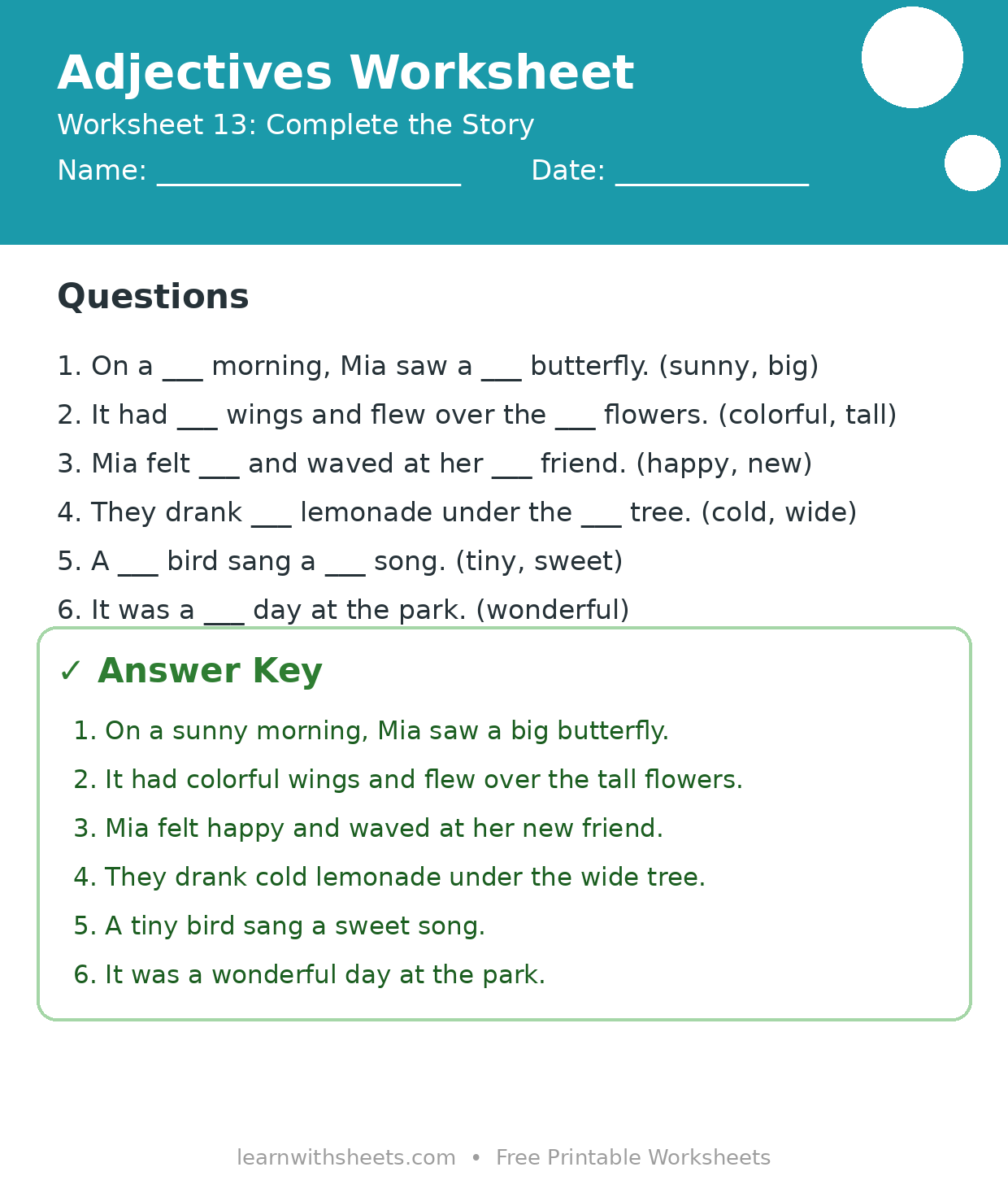
Worksheet 14: True or False: Opposites
Decide whether each pair of words are true opposites.
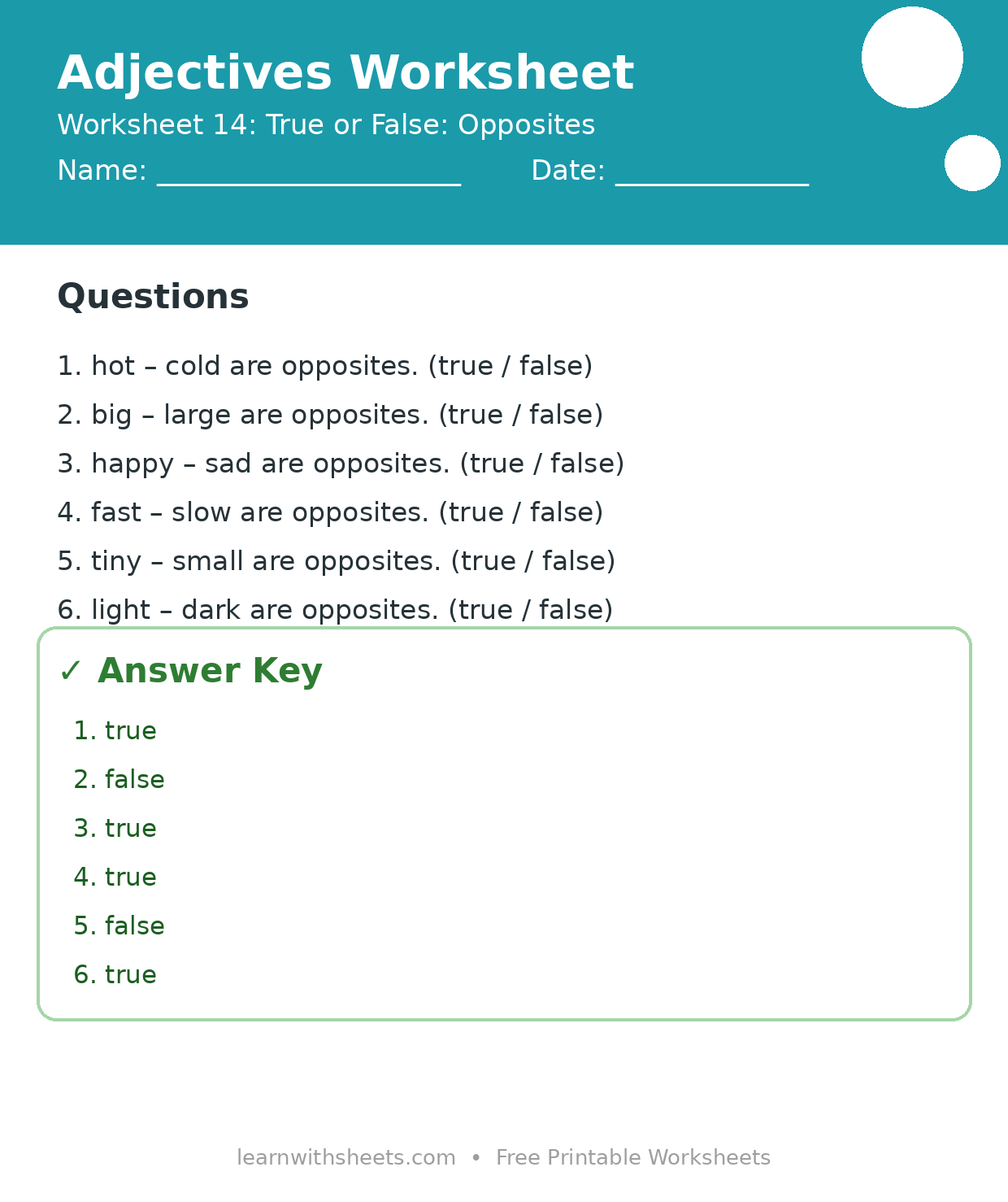
Worksheet 15: Sort into Groups
Write each adjective under the correct heading: Color, Size, or Feeling.
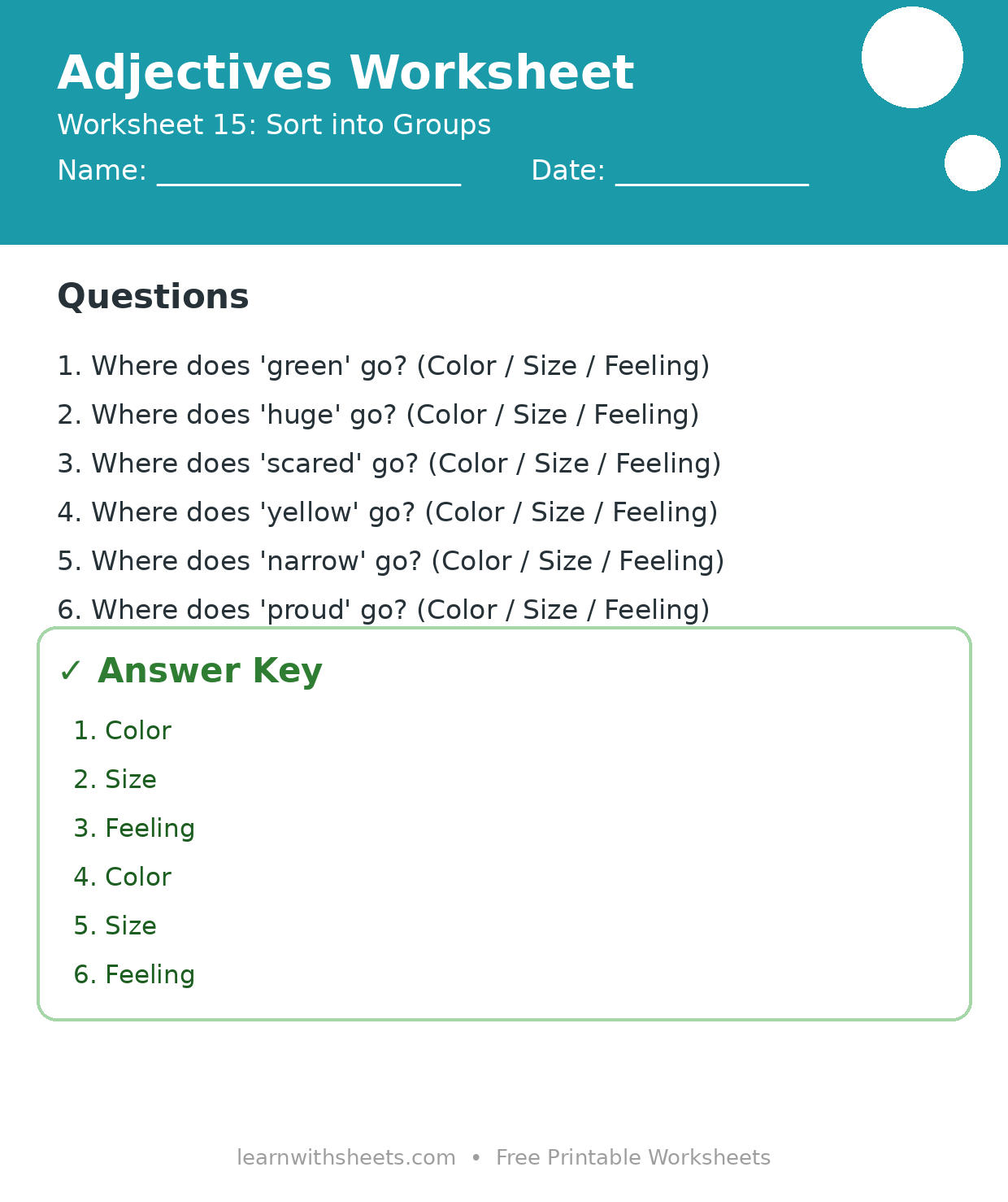
Worksheet 16: Unscramble and Write
Unscramble the words, then write the full sentence on the line.
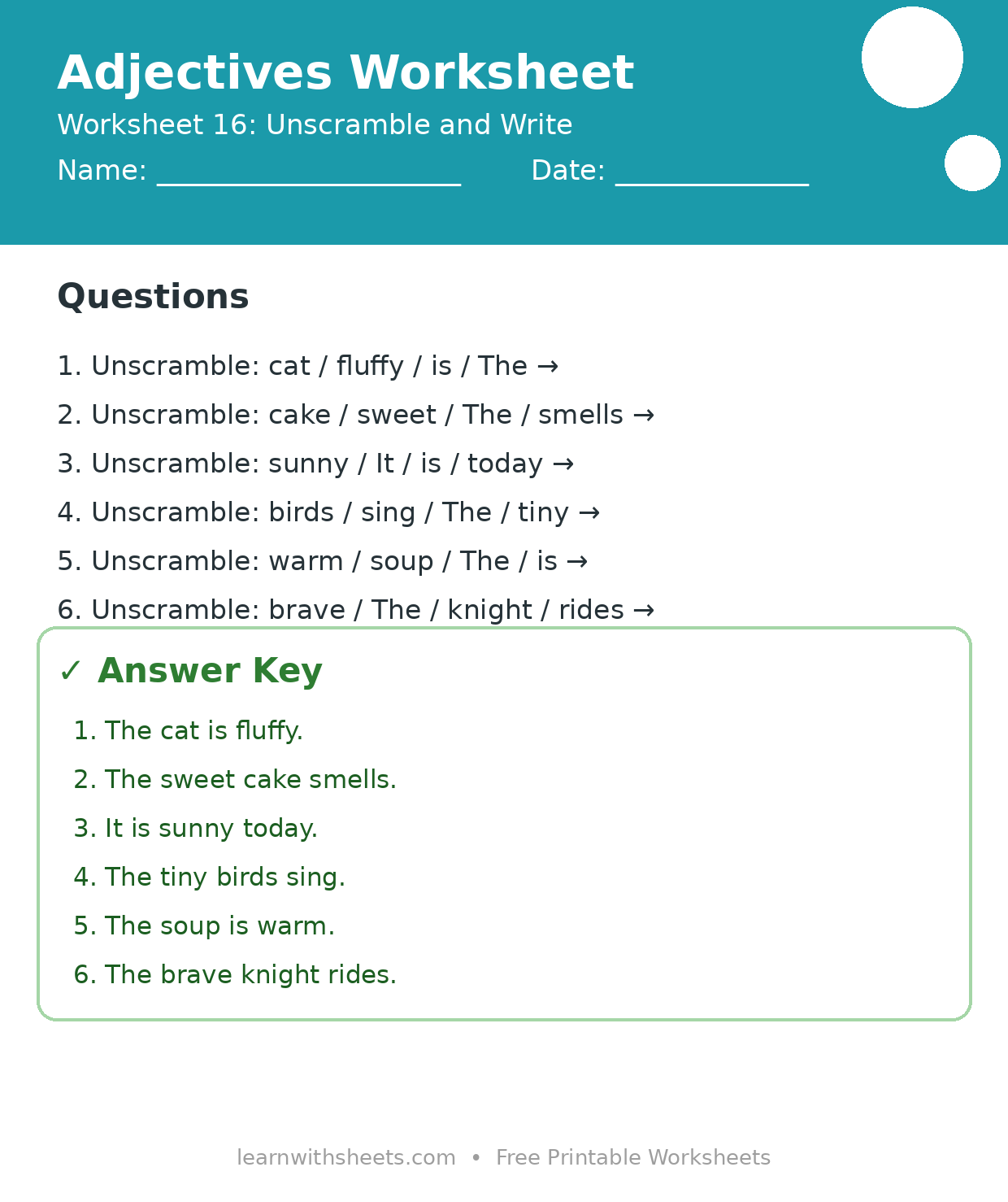
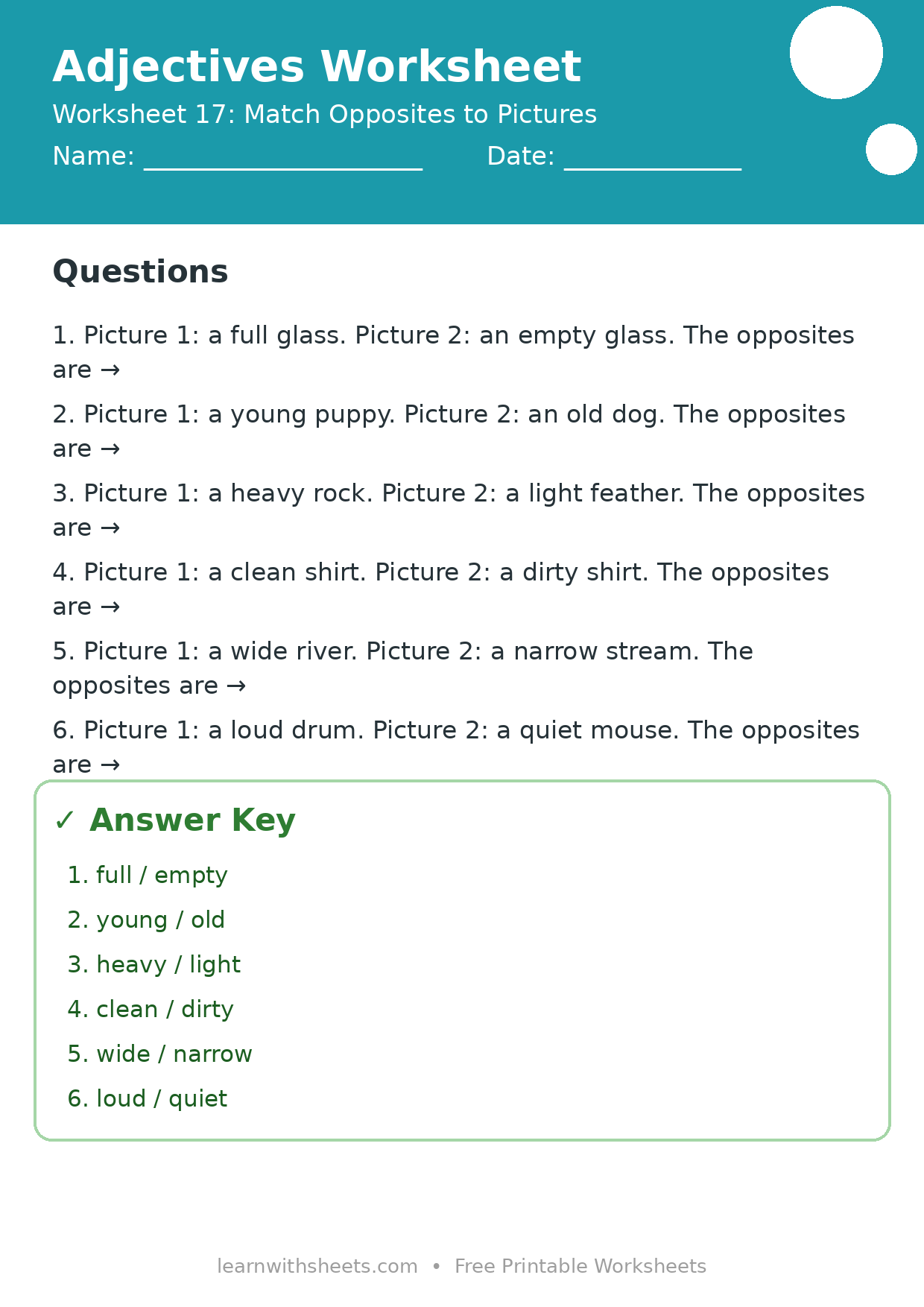
Worksheet 17: Match Opposites to Pictures
Pictures are described in words. Find the opposite pair for each.
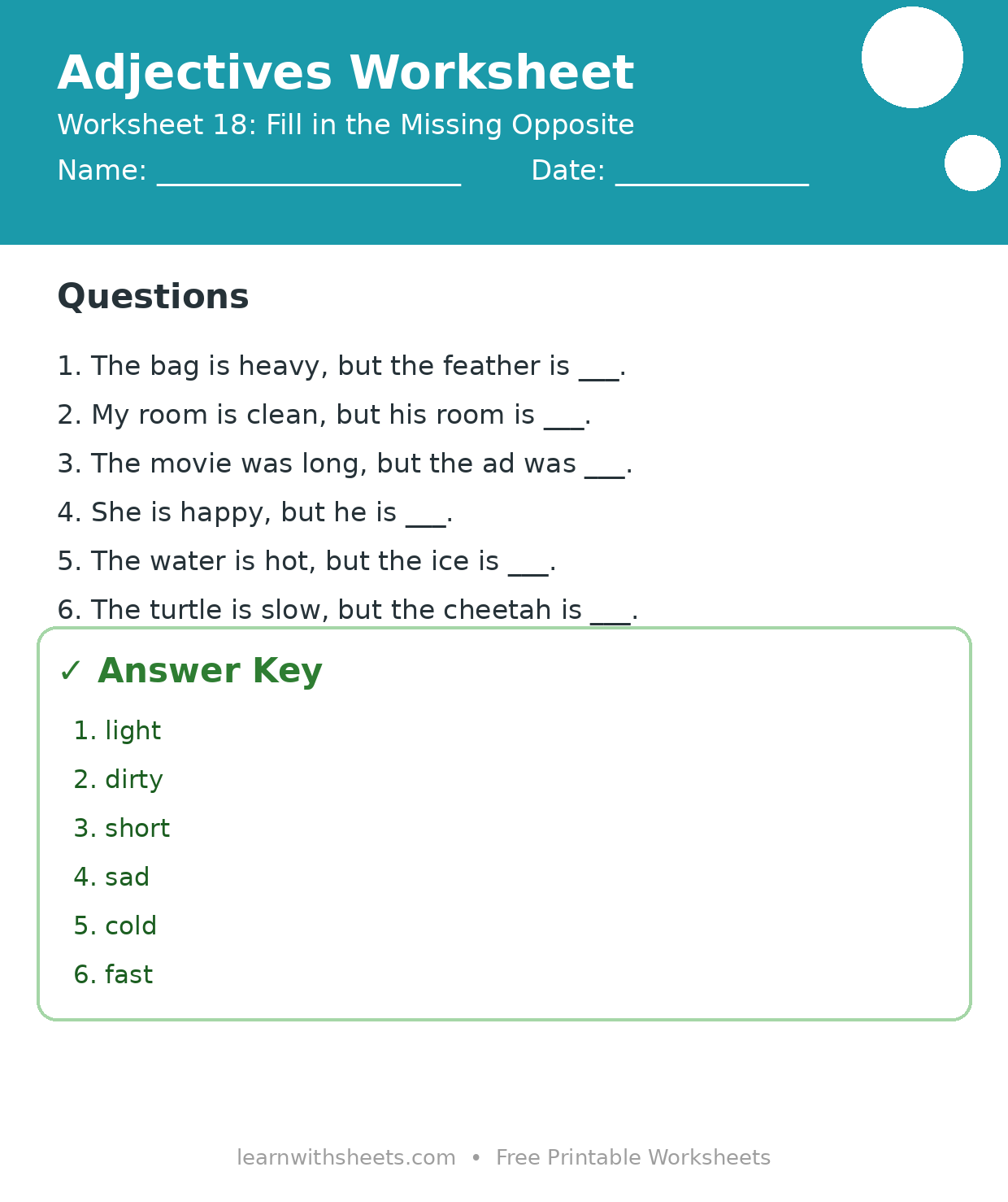
Worksheet 18: Fill in the Missing Opposite
Complete each sentence with the opposite of the underlined word.
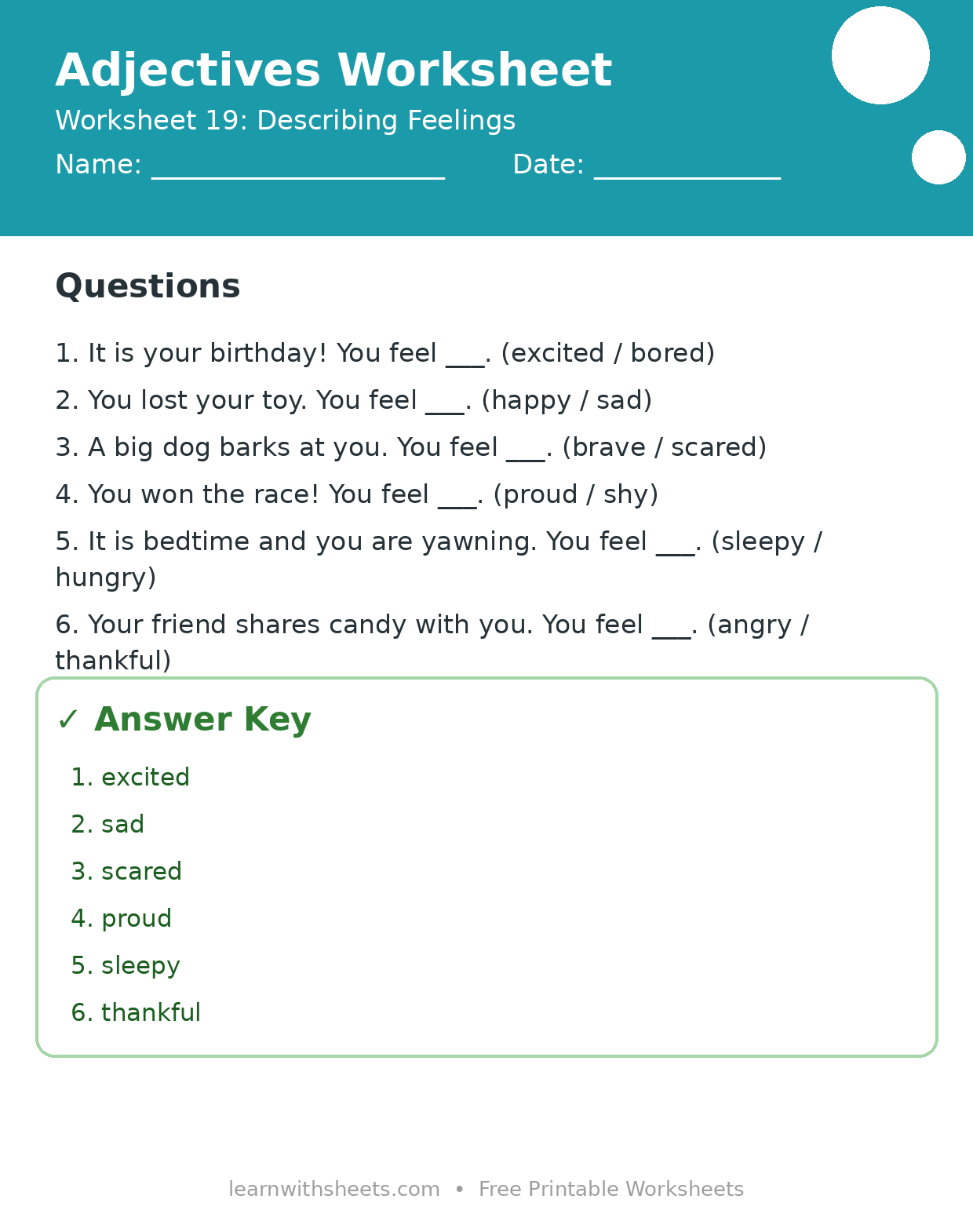
Worksheet 19: Describing Feelings
Choose the feeling word that matches each situation.
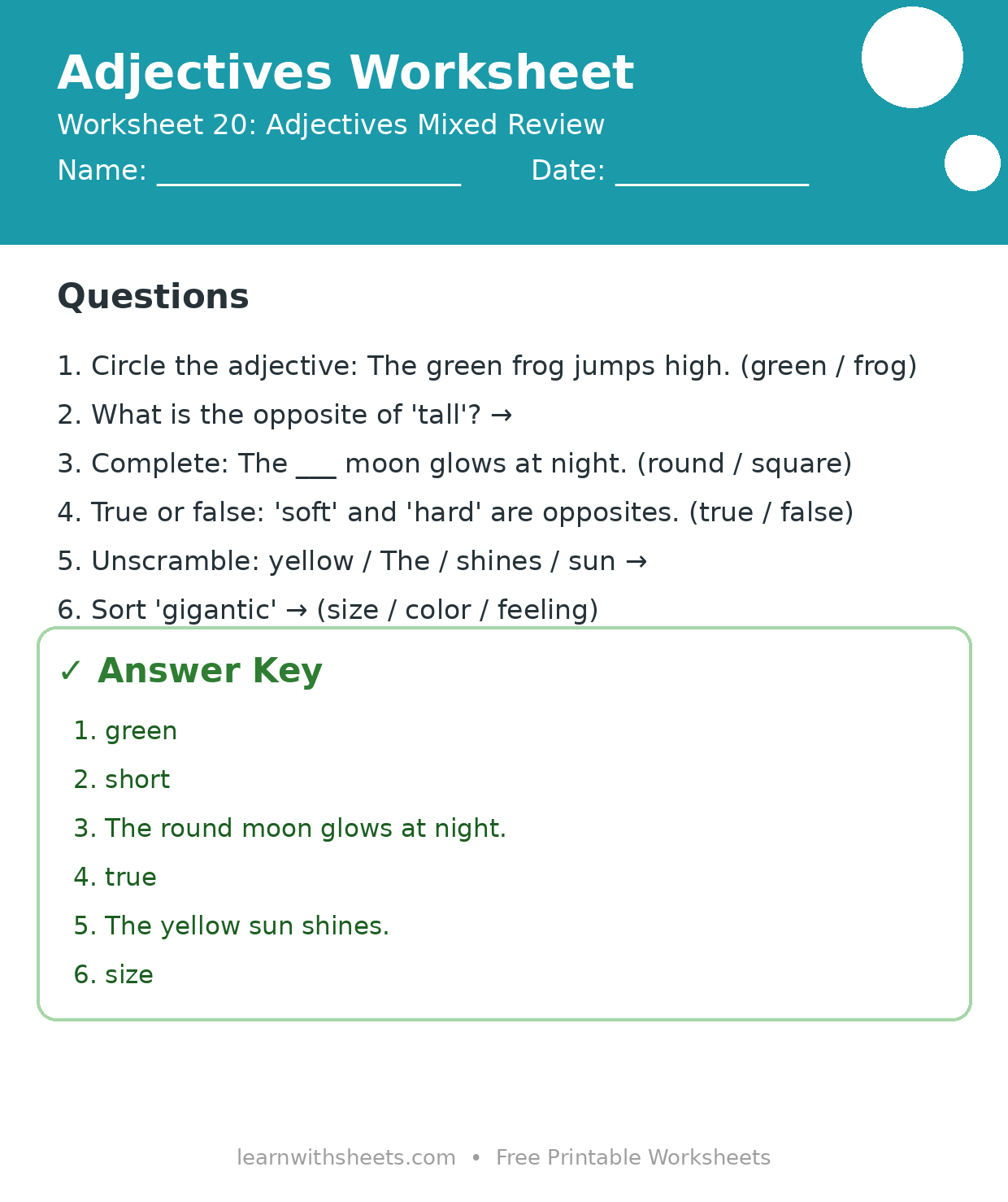
Worksheet 20: Adjectives Mixed Review
A fun mix of everything: describing words, opposites, and sentence building.

2 Comments